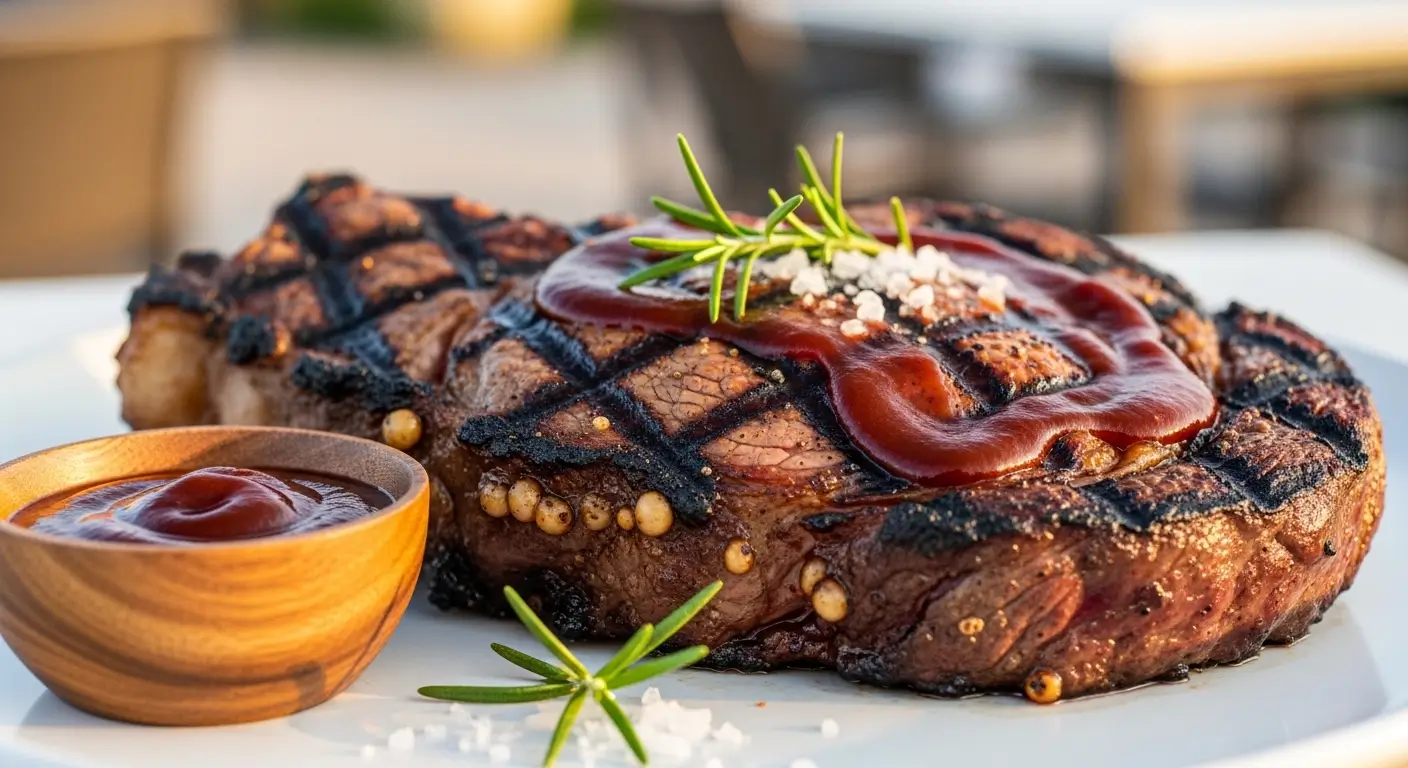
Ribeye with BBQ sauce is a classic and mouthwatering dish that combines the rich, tender texture of ribeye steak with the smoky, tangy flavors of BBQ sauce. Whether you’re grilling for a special occasion or just craving a delicious steak, this dish is sure to impress. In this guide, we’ll show you how to prepare, cook, and serve ribeye with BBQ sauce for a perfectly grilled meal.
The History of Ribeye Steak and BBQ Sauce
Origins of Ribeye Steak
The ribeye steak is known for its tenderness, juiciness, and rich marbling, making it one of the most sought-after cuts of beef. It’s cut from the rib section of the cow, and its characteristic marbling of fat gives it incredible flavor and moisture when cooked. The ribeye has been a favorite for steak lovers for generations, especially for grilling and pan-searing.
BBQ Sauce in American Cuisine
BBQ sauce has deep roots in American culture, especially in regions like the South and the Midwest, where grilling and smoking meats have been part of the culinary tradition for centuries. From tangy vinegar-based sauces to sweet tomato-based sauces, BBQ sauce is used to enhance the natural flavors of grilled meats, making it a perfect companion for ribeye steak.
The Rise of Ribeye with BBQ Sauce
While ribeye steaks are often seasoned simply with salt and pepper to highlight their natural flavor, the addition of BBQ sauce has grown in popularity over the years. The sweet, tangy, and smoky characteristics of BBQ sauce pair beautifully with the richness of ribeye, creating a unique and flavorful combination that appeals to meat lovers.
A Global Sensation
Although ribeye with BBQ sauce is often associated with American cuisine, it has made its way to other parts of the world. In countries like Australia, Canada, and the UK, grilled steaks with a variety of sauces have become a favorite, and ribeye with BBQ sauce is no exception. The combination of savory beef and sweet, tangy sauce has universal appeal.
Choosing the Best Ribeye Steak
Bone-in vs Boneless Ribeye
Ribeye steaks can be found with or without the bone. Bone-in ribeye steaks (also known as “cowboy steaks”) tend to have more flavor due to the bone, which helps retain moisture during cooking. Boneless ribeye steaks are easier to eat and cook slightly faster, making them a convenient choice for grilling.
Thickness of the Ribeye
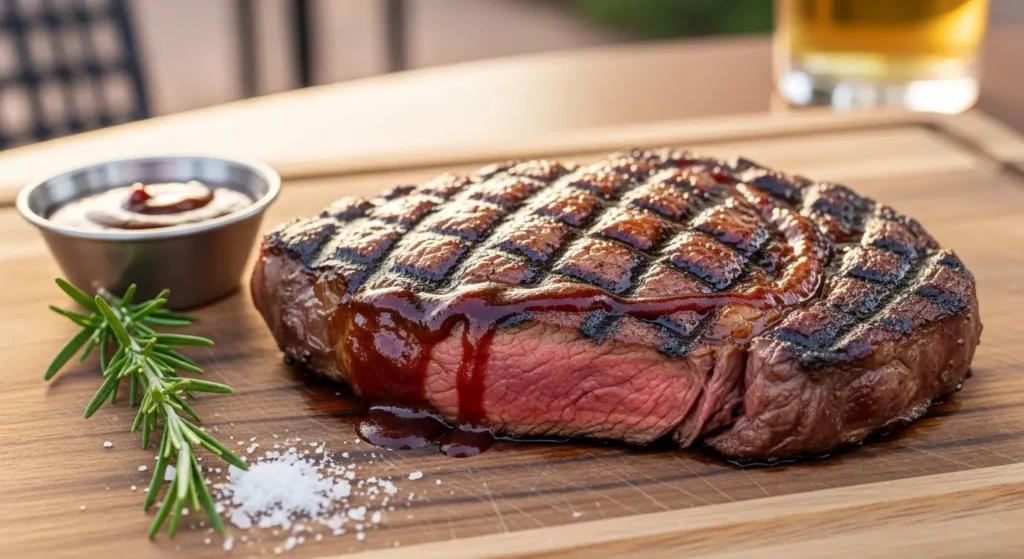
The thickness of the ribeye steak plays a significant role in its cooking time. A thicker steak (1.5 to 2 inches) provides a better balance of sear and juiciness, as it allows for a crispy crust while keeping the inside tender and moist. Thinner steaks cook faster, but they may lose some of their juiciness.
Grading of Beef
Ribeye steaks are graded based on the amount of marbling (fat) they have. The more marbling, the more tender and flavorful the steak will be. USDA Prime ribeye steaks are the highest quality and have the most marbling, making them an excellent choice for a tender, flavorful meal.
Dry-Aged vs Fresh Ribeye
Dry-aged ribeye steaks are aged for several weeks in a controlled environment, allowing the flavors to concentrate and develop a more intense taste. These steaks are typically more expensive but offer a unique flavor profile. Fresh ribeye steaks are still tender and juicy but have a milder flavor.
Preparing Ribeye with BBQ Sauce
Marinating the Ribeye
While ribeye steaks are flavorful on their own, marinating them can add another layer of complexity. A simple marinade made with olive oil, garlic, herbs, and a bit of vinegar or soy sauce will enhance the steak’s flavor and tenderness. Marinate the steak for at least 30 minutes, but for the best results, marinate for several hours or overnight.
Seasoning the Ribeye
Before cooking, season your ribeye steak with salt and pepper, or use a dry rub for extra flavor. A classic dry rub for ribeye might include paprika, garlic powder, onion powder, brown sugar, and smoked paprika. This seasoning blend complements the natural beef flavor and adds a slight sweetness that pairs wonderfully with BBQ sauce.
Preparing the BBQ Sauce
The BBQ sauce can make or break your dish. For a traditional BBQ ribeye, use a sweet and tangy tomato-based sauce or a smoky vinegar-based sauce, depending on your preference. You can also make your own BBQ sauce using ketchup, brown sugar, vinegar, mustard, and a variety of spices. Brush the sauce on during the final few minutes of cooking to create a sticky, caramelized glaze.
Resting the Ribeye
Allow the ribeye steak to come to room temperature before cooking. This ensures more even cooking throughout the steak. Once it’s prepared, let it rest for a few minutes after cooking to allow the juices to redistribute throughout the meat, making the steak more tender and juicy.
Cooking Ribeye with BBQ Sauce
Grilling the Ribeye
The best way to cook a ribeye steak is by grilling it over high heat. Preheat your grill to around 450°F (230°C). For a bone-in ribeye, grill for about 5-7 minutes per side for medium-rare, and for a boneless ribeye, grill for about 4-5 minutes per side. Grill the steak until it reaches your desired level of doneness, using a meat thermometer to check for accuracy (medium-rare is 130°F or 54°C, medium is 140°F or 60°C).
Pan-Searing the Ribeye
If you prefer to cook indoors, pan-searing is another great method. Heat a cast-iron skillet over medium-high heat and add a small amount of oil. Once the pan is hot, place the ribeye in the skillet and cook for 4-5 minutes per side. You can also add butter and herbs (like thyme or rosemary) during the last minute of cooking for added flavor.
Applying BBQ Sauce
Once the ribeye is almost done, brush a generous layer of BBQ sauce onto the steak. Let the sauce caramelize for 1-2 minutes on each side. This will create a beautiful glaze on the steak and add that signature smoky-sweet flavor. Don’t apply BBQ sauce too early, as the sugar in the sauce can burn over direct heat.
Checking for Doneness
To check if your ribeye is cooked to perfection, use a meat thermometer. Insert the thermometer into the thickest part of the steak. For medium-rare, aim for an internal temperature of 130°F (54°C), and for medium, aim for 140°F (60°C). Keep in mind that the steak will continue to cook slightly as it rests.
Serving Ribeye with BBQ Sauce
Resting the Steak
Once the ribeye is cooked, remove it from the grill or skillet and let it rest for 5-10 minutes. This resting period helps the juices redistribute within the steak, ensuring that each bite is tender and juicy.
Pairing with Sides
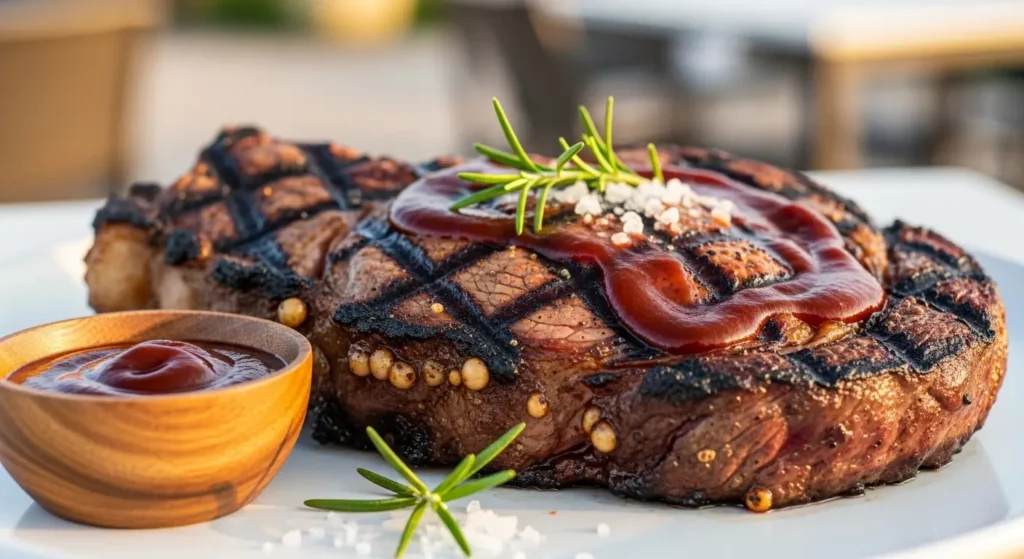
Ribeye with BBQ sauce pairs wonderfully with classic BBQ sides like coleslaw, baked beans, corn on the cob, or grilled vegetables. You can also serve it with mashed potatoes, roasted sweet potatoes, or a fresh green salad for a more balanced meal.
Garnishing the Ribeye
To enhance the presentation of your ribeye, garnish it with fresh herbs such as parsley, cilantro, or thyme. A squeeze of fresh lemon or lime juice can add brightness to the rich flavors of the steak and BBQ sauce.
Slicing the Ribeye
When ready to serve, slice the ribeye against the grain for maximum tenderness. This ensures that the steak is easy to chew and offers a more enjoyable eating experience.
Variations of Ribeye with BBQ Sauce
Spicy BBQ Ribeye
If you like a bit of heat, try adding some spicy ingredients to your BBQ sauce. Chipotle peppers, cayenne pepper, or chili powder can all add an extra kick to your sauce. The smoky flavor from the chipotle peppers complements the richness of the ribeye beautifully.
Sweet and Tangy BBQ Ribeye
For a sweeter take on ribeye with BBQ sauce, look for a sauce that contains honey, brown sugar, or maple syrup. The sweetness balances out the savory flavors of the steak and adds depth to the overall taste. You can also mix in some apple cider vinegar for a tangy finish.
Garlic and Herb BBQ Ribeye
For a more aromatic option, make a garlic and herb BBQ sauce by adding minced garlic, rosemary, thyme, and balsamic vinegar to your sauce. This variation brings a fragrant, savory layer of flavor to the ribeye while still complementing the smoky BBQ sauce.
Smoky BBQ Ribeye
To enhance the smoky flavor, use a BBQ sauce made with smoked paprika or liquid smoke. This will give your ribeye a deeper, richer smokiness that pairs perfectly with the charred crust of the steak.
FAQs
How long should I cook a ribeye steak on the grill?
Grill a ribeye steak for about 5-7 minutes per side for medium-rare, depending on the thickness of the steak.
What’s the best BBQ sauce for ribeye?
The best BBQ sauce for ribeye depends on your taste preferences. A sweet and tangy tomato-based BBQ sauce works well, but a smoky or spicy sauce can also be a great choice.
Can I use a dry rub instead of BBQ sauce?
Yes, you can use a dry rub for seasoning the ribeye, but BBQ sauce adds a delicious caramelized glaze and extra flavor during the grilling process.
Should I let the ribeye rest after grilling?
Yes, it’s essential to let the ribeye rest for 5-10 minutes after cooking. This helps the juices redistribute within the steak for grilling.
Conclusion
Ribeye with BBQ sauce is a delicious and satisfying dish that brings together the rich, tender flavor of ribeye steak with the smoky, tangy goodness of BBQ sauce. By choosing the right cut of meat, seasoning it with care, and grilling it to perfection, you can create a truly memorable meal. Whether you prefer a sweet, smoky, or spicy BBQ sauce, this dish is incredibly versatile and sure to please any meat lover. Serve it with your favorite sides, and you’ve got a meal that’s perfect for any occasion.