Filet Mignon (8 oz) is often regarded as the pinnacle of steak cuts, known for its tenderness, flavor, and melt-in-your-mouth texture. Whether you’re celebrating a special occasion or just treating yourself, this steak offers an unmatched dining experience. In this article, we explore everything you need to know about Filet Mignon, including how to select, cook, and serve this premium cut of beef.
What Makes Filet Mignon Special?
The Tenderness Factor of Filet Mignon
Filet Mignon is renowned for being the most tender cut of beef. Sourced from the tenderloin, which is a muscle that doesn’t get much exercise, it offers a fine texture that is soft, juicy, and easy to cut. The 8 oz portion is perfect for those who want a rich steak experience without overindulging.
Flavor Profile of Filet Mignon
While Filet Mignon is prized for its tenderness, it has a milder flavor compared to fattier cuts like ribeye. The subtle beefy taste is enhanced when cooked properly, allowing the natural flavors of the meat to shine. The absence of a large amount of fat makes it lean, but this is often complemented by sauces or seasoning.
The Versatility of Filet Mignon in Cooking
Filet Mignon is incredibly versatile and can be cooked in various ways. Whether you prefer your steak seared in a pan, grilled, or broiled, this cut holds up wonderfully to different cooking methods. Pairing it with a variety of sauces, sides, and seasonings makes it a favorite for fine dining and casual meals alike.
Ideal for Special Occasions
Due to its tenderness and refined nature, Filet Mignon is often chosen for special occasions like anniversaries, celebrations, or romantic dinners. The 8 oz portion is typically perfect for individual servings, offering a rich and satisfying steak experience without feeling too heavy.
How to Select the Best Filet Mignon
Sourcing High-Quality Beef
When selecting Filet Mignon, look for beef that is labeled as USDA Prime or Choice. USDA Prime offers the highest quality, with abundant marbling that contributes to both flavor and tenderness. Choice cuts are slightly less marbled but still offer excellent quality and taste.
Color and Texture: Key Indicators of Freshness
Fresh Filet Mignon should be bright red with no signs of discoloration. The texture should be firm yet slightly yielding when pressed. Avoid cuts that appear dry, have brown spots, or are overly soft. The marbling (intramuscular fat) should be visible, as it contributes to the steak’s flavor and juiciness.
Thickness of the Steak: 8 oz Filet Mignon
An 8 oz Filet Mignon is typically about 1.5 inches thick, which strikes the perfect balance between tenderness and the ability to develop a delicious sear on the outside while remaining tender inside. This portion size is ideal for individuals who prefer a single serving.
Frozen vs. Fresh Filet Mignon
Fresh Filet Mignon is always preferable, but frozen cuts can be used in a pinch if stored and thawed correctly. Always allow frozen steaks to thaw in the fridge for 24 hours before cooking to maintain the texture and flavor.
Preparing Filet Mignon: Tips for Perfect Cooking
Bringing the Steak to Room Temperature
Before cooking, allow your Filet Mignon to sit at room temperature for 30-45 minutes. This ensures even cooking and prevents the steak from seizing up in the pan or on the grill.
Seasoning Your Filet Mignon
Since Filet Mignon has a delicate flavor, you don’t need heavy seasoning. A simple seasoning of kosher salt and freshly ground black pepper is enough to enhance its natural taste. For added depth, you can include a bit of garlic powder, rosemary, or thyme, but keep it minimal to avoid overpowering the steak.
The Importance of Proper Searing
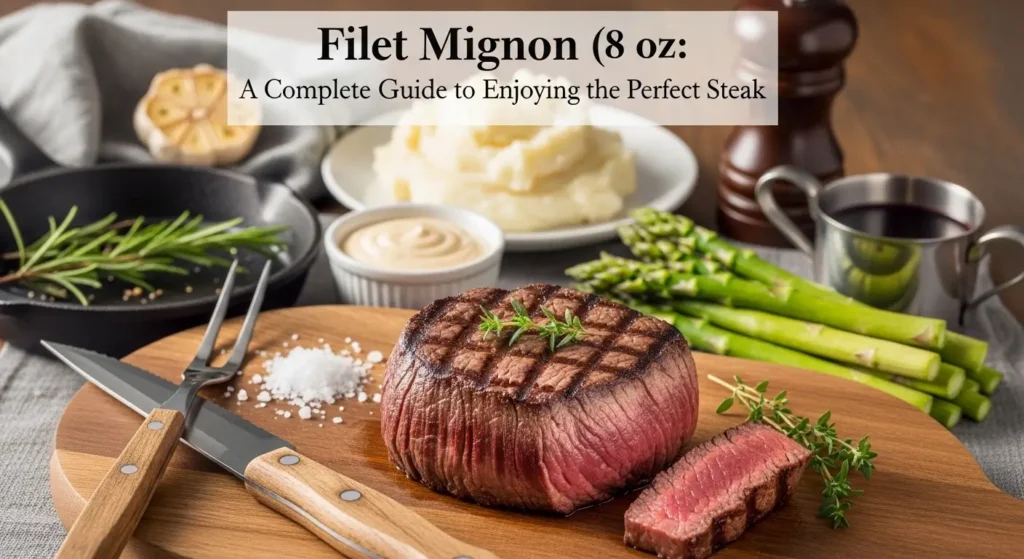
The key to achieving a perfect Filet Mignon is searing it properly. A hot pan or grill ensures a flavorful, crispy crust while locking in the steak’s juices. Searing each side for 2-3 minutes is usually sufficient before finishing the steak in the oven or continuing to cook it to the desired doneness.
Using Butter for Extra Flavor
Basting the steak with butter during the final moments of cooking adds richness and flavor. Adding a sprig of rosemary or thyme, along with smashed garlic cloves, to the butter creates a compound butter effect that enhances the overall taste.
How to Cook Filet Mignon (8 oz) to Perfection
Pan-Seared Filet Mignon
Pan-searing is a popular method for cooking Filet Mignon. Heat a cast-iron skillet or heavy-bottomed pan over medium-high heat until hot. Add a tablespoon of olive oil and, once the oil shimmers, add your seasoned Filet Mignon. Sear each side for 2-3 minutes, then transfer the pan to a preheated oven (400°F) and roast for 5-6 minutes for medium-rare. Let the steak rest before serving.
Grilled Filet Mignon
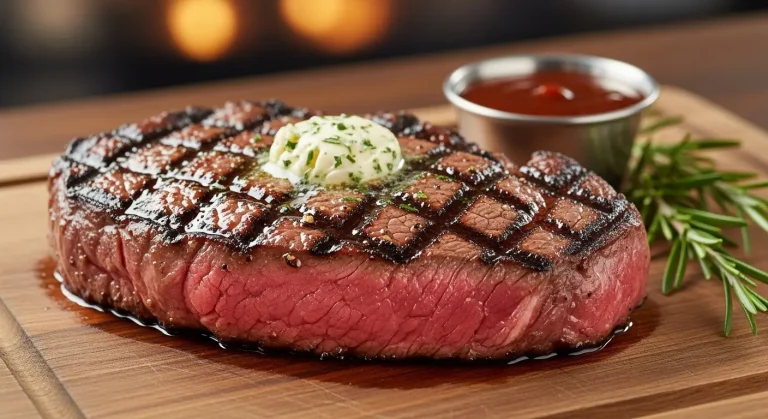
Grilling brings a delicious smoky flavor to Filet Mignon. Preheat your grill to high heat and lightly oil the grill grates. Place the steak on the grill and cook for 3-4 minutes per side, turning once for crosshatch grill marks. Finish by cooking the steak for another 3-5 minutes on indirect heat for your desired doneness.
Broiled Filet Mignon
Broiling Filet Mignon is another easy method that provides excellent results. Preheat your oven’s broiler and place the steak on a broiler pan. Broil the steak for 4-5 minutes per side, checking the internal temperature with a meat thermometer to reach your preferred doneness.
Sous Vide Filet Mignon
For the ultimate precision in cooking, sous vide is a method that guarantees perfect results. Season the steak, place it in a vacuum-sealed bag, and cook it in a water bath at 130°F for 1.5-2 hours. After cooking, sear the steak quickly on a hot skillet to develop a crust.
How to Achieve the Perfect Doneness for Filet Mignon
Rare (120°F – 125°F)
For a rare steak, cook the Filet Mignon for about 2-3 minutes per side, ensuring the internal temperature is between 120°F and 125°F. The center will be cool and red, with a tender texture.
Medium-Rare (130°F – 135°F)
Medium-rare is often considered the ideal doneness for Filet Mignon, as it preserves the steak’s juiciness while offering a warm, red center. For medium-rare, cook the steak for about 3-4 minutes per side and check the internal temperature at 130°F – 135°F.
Medium (140°F – 145°F)
Medium doneness provides a warm pink center with a firmer texture. If you prefer your steak cooked to medium, aim for an internal temperature between 140°F and 145°F. Cook for 4-5 minutes per side for the best results.
Medium-Well (150°F – 155°F)
For medium-well Filet Mignon, cook the steak until it reaches an internal temperature of 150°F to 155°F. The steak will have a slight hint of pink in the center but will be mostly brown throughout.
Well-Done (160°F and above)
Well-done Filet Mignon is cooked all the way through and is typically firm with no pink in the center. To achieve well-done, cook for about 5-6 minutes per side, reaching an internal temperature of 160°F or higher.
How to Serve Filet Mignon (8 oz)
Resting the Steak After Cooking
Once your Filet Mignon is cooked to perfection, let it rest for about 5-10 minutes. This allows the juices to redistribute, ensuring a tender and juicy steak. Avoid cutting into it immediately after cooking to preserve its moisture.
Topping Options for Filet Mignon
While Filet Mignon is delicious on its own, there are a variety of toppings and accompaniments that can elevate the dish:
- Bearnaise Sauce: A rich, creamy sauce made with butter, egg yolks, tarragon, and shallots.
- Blue Cheese: A crumble of blue cheese adds a sharp, creamy contrast to the tender steak.
- Garlic Butter: A decadent topping that adds flavor and richness.
- Mushroom Sauce: A savory sauce made with sautéed mushrooms, butter, and cream for added depth.
Pairing Filet Mignon with Side Dishes
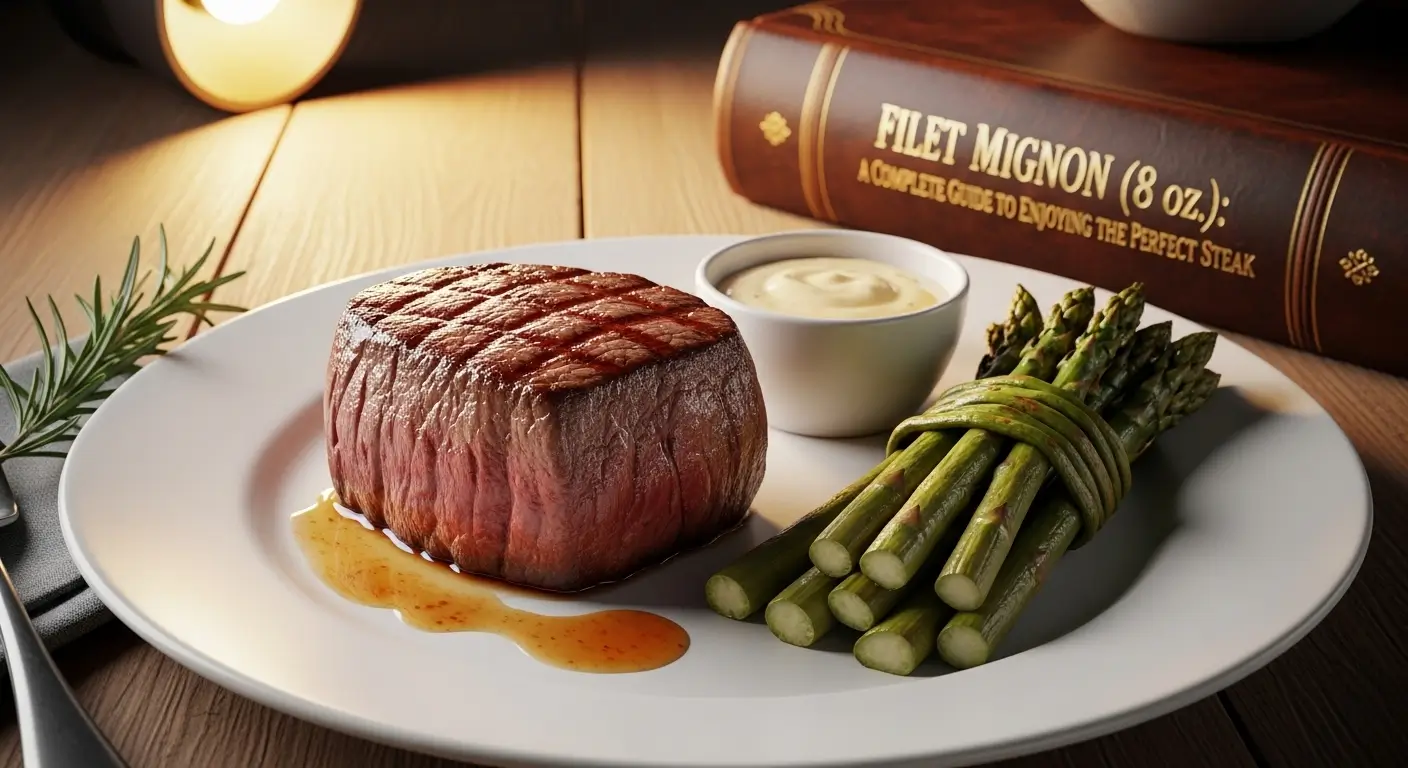
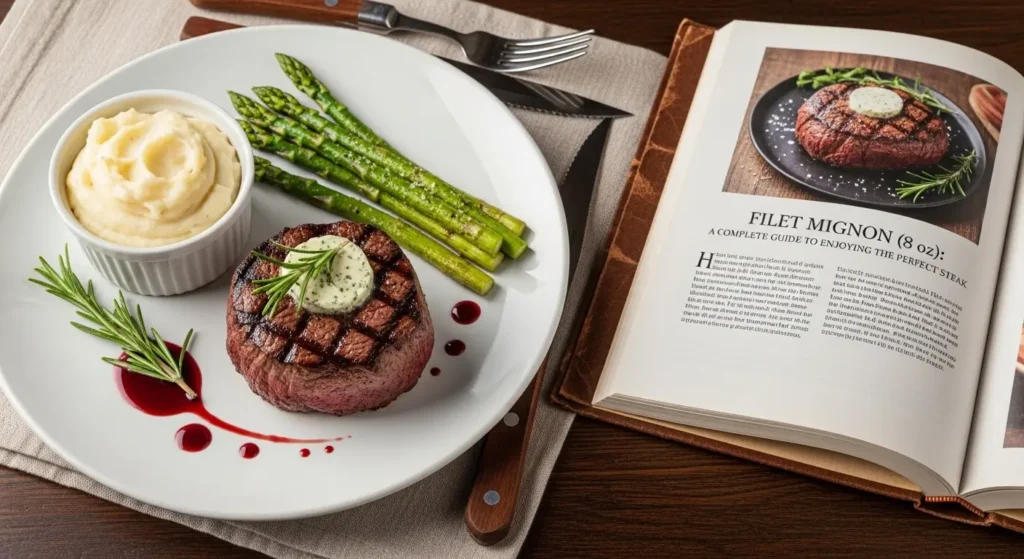
Filet Mignon pairs beautifully with a variety of side dishes. Classic options include mashed potatoes, roasted vegetables, or a simple salad. For a more luxurious touch, consider adding a side of truffle mac and cheese, creamed spinach, or grilled asparagus.
Wine Pairings for Filet Mignon
To complement the flavors of Filet Mignon, choose a full-bodied red wine such as Cabernet Sauvignon, Merlot, or Malbec. These wines’ tannins and bold flavors help balance the richness of the steak.
Tips for Storing Leftover Filet Mignon
Refrigerating Leftover Filet Mignon
If you have leftover Filet Mignon, store it in an airtight container and refrigerate it for up to 3 days. To reheat, use low heat in the oven or skillet to avoid overcooking the steak.
Freezing Leftover Filet Mignon
For longer storage, Filet Mignon can be frozen for up to 3 months. Wrap the steak tightly in plastic wrap and aluminum foil, or place it in a vacuum-sealed bag to prevent freezer burn. Thaw it overnight in the refrigerator before reheating.
FAQs
What is the best way to cook Filet Mignon?
Pan-searing, grilling, or broiling are all excellent methods for cooking Filet Mignon. The key is to use high heat to create a beautiful crust while maintaining the tenderness inside.
How do I know when Filet Mignon is done?
Use a meat thermometer to check the internal temperature of your Filet Mignon. For medium-rare, aim for 130°F to 135°F.
Should I marinate Filet Mignon before cooking?
Marinating is optional for Filet Mignon, but a light seasoning or marinade can enhance its flavor. However, the steak’s tenderness doesn’t require heavy marination.
Can I cook Filet Mignon on a gas grill?
Yes, a gas grill is perfect for cooking Filet Mignon. Preheat the grill and cook the steak over high heat for a few minutes on each side.
How long should I rest Filet Mignon after cooking?
Let Filet Mignon rest for 5-10 minutes after cooking to allow the juices to redistribute, ensuring a tender and juicy steak.
Conclusion
Filet Mignon (8 oz) is the epitome of steak perfection, offering unparalleled tenderness and a delicate flavor. Whether you’re grilling, pan-searing, or broiling, this cut provides a premium dining experience. By following the tips in this guide, you can easily create a memorable steak dinner that’s sure to impress.