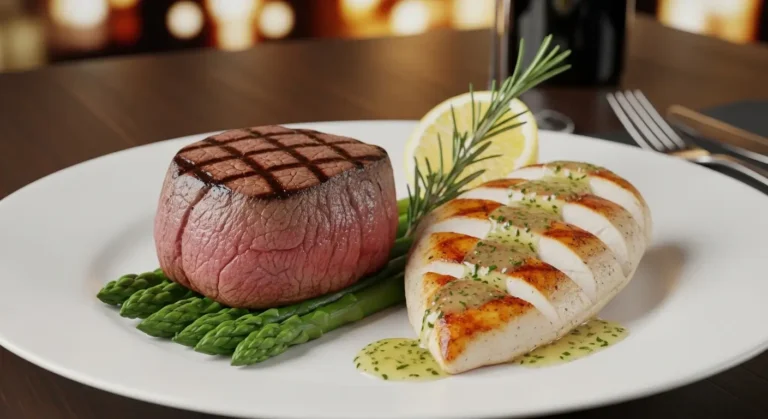
Porterhouse (22 oz) is one of the most sought-after cuts of beef, known for its combination of tenderness and bold flavor. With its signature T-shaped bone, this steak offers the best of both worlds: a juicy strip and a tender filet mignon. In this guide, we’ll dive deep into everything you need to know about the Porterhouse (22 oz) steak, from its characteristics and cooking methods to serving tips and frequently asked questions.
The History and Origins of Porterhouse Steak
Origins of the Porterhouse
The Porterhouse steak is named after the Porter House restaurant in New York, where it was first popularized. The steak comes from the rear end of the cow’s short loin, and it’s typically cut thick to retain its flavor and tenderness. Historically, the Porterhouse was a symbol of luxury, enjoyed by the elite.
Evolution of Porterhouse in American Cuisine
Once a cut reserved for fine dining, the Porterhouse steak has evolved into a mainstream favorite, especially in American steakhouses. The large size and unique combination of meat cuts made it a perfect option for those seeking a hearty, indulgent meal.
The T-Bone and Porterhouse Connection
Both Porterhouse and T-bone steaks come from the short loin section, and the only real difference lies in the size of the tenderloin portion. Porterhouse steaks have a significantly larger filet mignon portion, making it an excellent choice for meat lovers who want the best of both cuts.
The Rise in Popularity of Porterhouse (22 oz)
At 22 ounces, the Porterhouse has become a favored choice for steak lovers looking for a substantial and flavorful meal. The 22 oz size is typically shared between two people, offering a filling and indulgent dining experience.
Characteristics of Porterhouse (22 oz)
The T-shaped Bone and Its Significance
The Porterhouse (22 oz) is easily recognized by its T-shaped bone, which divides the tenderloin from the strip steak. The bone adds flavor during the cooking process and helps in achieving that perfect char on the steak, making it an iconic cut in the culinary world.
Tenderloin and Strip Steak Combination
The beauty of the Porterhouse is its combination of two prized cuts: the tenderloin and the strip steak. The tenderloin is renowned for its buttery tenderness, while the strip steak provides a firmer, beefier flavor. Together, they create a balanced and delicious steak experience.
Size and Serving Options
Weighing in at 22 ounces, the Porterhouse is a substantial portion. It’s perfect for sharing but also makes for a satisfying individual meal if you’re looking for a hearty feast. When served, it’s often sliced into smaller pieces to share its rich, juicy flavors among diners.
Cooking Characteristics of Porterhouse
Porterhouse steaks are typically thick, so they require a bit more attention when cooking. Whether grilling or pan-searing, they benefit from slow and even cooking to ensure the tenderloin remains juicy while the strip steak is seared to perfection. This cut is ideal for those who enjoy a juicy, flavorful steak with both texture and tenderness.
Nutritional Benefits of Porterhouse (22 oz)
High Protein Content
Porterhouse (22 oz) steaks are an excellent source of protein, providing a significant portion of the daily recommended intake. Protein is essential for muscle repair, growth, and overall body function, making this steak an ideal meal for active individuals and those looking to build muscle mass.
Fat and Calorie Content
As a marbled cut of beef, the Porterhouse contains a higher amount of fat, particularly saturated fat, which gives the steak its rich flavor. A 22-ounce portion will contain a significant amount of calories, so it’s best enjoyed as an occasional indulgence, especially if you’re watching your calorie intake.
Micronutrients in Porterhouse
Porterhouse (22 oz) is packed with essential micronutrients such as iron, zinc, and B vitamins. These nutrients are vital for energy metabolism, immune function, and red blood cell production, supporting overall health while offering a tasty meal.
Heart Health Considerations
While Porterhouse steaks are high in fat, consuming them in moderation, especially when paired with heart-healthy sides like vegetables, can still fit into a balanced diet. The iron found in this cut helps prevent anemia, while the zinc supports immune health.
Cooking Methods for Porterhouse (22 oz)
Grilling the Perfect Porterhouse
Grilling is one of the best methods for cooking a Porterhouse steak, as it imparts a smoky flavor and crisp exterior. Preheat the grill to medium-high heat, and cook the steak for about 4-6 minutes per side, depending on your desired level of doneness. Let it rest before slicing to retain its juices.
Pan-Seared Porterhouse with Garlic Butter
For an incredible flavor profile, sear your Porterhouse (22 oz) in a hot cast-iron skillet, adding garlic, rosemary, and butter in the final moments of cooking. This method ensures a beautiful crust on the outside while keeping the interior tender and juicy.
Reverse Searing for Porterhouse
Reverse searing is a technique that involves cooking the steak slowly in the oven before finishing it with a sear on a hot grill or skillet. This method is perfect for thick cuts like the Porterhouse (22 oz), ensuring an even cook and a flavorful crust without overcooking the interior.

Sous Vide Cooking for Precision
Sous vide cooking offers precise control over the steak’s doneness. Set your sous vide bath to 130°F (54°C) for medium-rare, then sear the steak on a hot pan for 1-2 minutes per side to achieve that perfect char while maintaining tenderness.
How to Choose the Best Porterhouse (22 oz)
Selecting High-Quality Meat
When choosing Porterhouse (22 oz), look for steaks that have well-distributed marbling throughout the meat. This marbling ensures a tender and juicy steak with a full flavor. Avoid steaks with a lot of gristle, as these may not offer the same quality or taste.
Grass-Fed vs. Grain-Fed Porterhouse
Grass-fed Porterhouse typically has a leaner profile and a slightly more pronounced, earthy flavor, while grain-fed Porterhouse is more marbled and rich. Both types can be delicious, but the choice comes down to your preference for flavor and texture.
Freshness Matters
Always choose Porterhouse steaks that appear fresh, with a deep red color and firm texture. The smell should be neutral, and the steak should not feel slimy or have any discoloration. Freshness plays a significant role in ensuring the best taste and tenderness when cooked.
Where to Buy Porterhouse
When looking for high-quality Porterhouse (22 oz), purchase from trusted butchers or reputable grocery stores. Some specialty shops offer dry-aged Porterhouse, which has a more concentrated flavor and a unique texture. Many local farms offer Porterhouse steaks raised without antibiotics or hormones, offering a premium experience.
Serving Suggestions for Porterhouse (22 oz)
Classic Sides to Pair with Porterhouse
A Porterhouse (22 oz) is perfect when served with classic steakhouse sides. Mashed potatoes, grilled asparagus, or sautéed mushrooms are great options that complement the richness of the steak. A Caesar salad or crisp green beans also balances out the meal.
Wine Pairings for Porterhouse
A full-bodied red wine, such as Cabernet Sauvignon, Merlot, or Syrah, is the perfect pairing for Porterhouse steak. These wines have enough tannins to cut through the richness of the steak and enhance the flavors. If you prefer white wine, a rich Chardonnay will do well.
Sauces and Condiments for Porterhouse
Porterhouse steaks are flavorful on their own, but they can be complemented with a variety of sauces. Béarnaise sauce, chimichurri, or a rich red wine reduction all work wonderfully with the steak. For a simple yet indulgent touch, garlic butter is a popular choice.

Gourmet Uses for Leftover Porterhouse
Leftover Porterhouse (22 oz) can be repurposed in gourmet dishes. Thinly slice it and add it to sandwiches, salads, or tacos for a delicious and elevated meal. The rich flavor of the steak can also be used in pasta dishes or served with roasted vegetables for a satisfying meal.
Storing and Preserving Porterhouse (22 oz)
Refrigerating Fresh Porterhouse
To keep your Porterhouse steak fresh, refrigerate it in its original packaging. The steak should be consumed within 3 to 5 days of purchase for the best flavor and texture. Ensure your refrigerator is set to 40°F (4°C) or lower to keep the steak at an optimal temperature.
Freezing Porterhouse for Long-Term Storage
If you don’t plan to cook the Porterhouse right away, freezing is a great option. Wrap the steak tightly in plastic wrap or foil, and place it in an airtight freezer bag. When frozen, it can last for up to 6 months, preserving its flavor and tenderness.
Thawing Frozen Porterhouse
Thaw frozen Porterhouse steaks in the refrigerator overnight. Never thaw meat at room temperature, as it increases the risk of bacterial growth. Once thawed, cook the steak immediately for the best texture and flavor.
Reheating Leftovers
To reheat leftover Porterhouse (22 oz), use low and slow heat to preserve its tenderness. A gentle reheat in the oven at low temperature or a quick pan-sear with a bit of butter can bring your leftovers back to life without overcooking them.
FAQs about Porterhouse (22 oz)
What is the difference between Porterhouse and T-bone?
Porterhouse has a larger portion of tenderloin compared to T-bone, which makes it a more indulgent cut.
How long should I cook a 22 oz Porterhouse steak?
Grill or pan-sear the steak for 4-6 minutes per side for medium-rare, adjusting time based on your preferred doneness.
Can I eat a Porterhouse steak rare?
Yes, Porterhouse can be cooked rare, medium-rare, or to your desired level of doneness.
How do I store leftover Porterhouse?
Store leftover Porterhouse in an airtight container in the refrigerator for up to 3 days or freeze for long-term storage.
What sides go best with Porterhouse?
Classic sides such as mashed potatoes, sautéed vegetables, and a fresh green salad complement the richness of Porterhouse steak.
Conclusion
Porterhouse (22 oz) is a true indulgence for steak lovers, offering the best of both the tenderloin and strip steak in one cut. Its size and flavor make it a perfect centerpiece for a special meal. Whether you prefer it grilled, seared, or sous vide, this steak is sure to impress with every bite. Enjoy it with the right sides, sauces, and wine to elevate the experience to a whole new level.